Former Afghan parliamentarian extradited to the US
Author & Investigator: Shukria Malek Zada
Method: Open-source
A former Afghan general, member of parliament and First Deputy Speaker of the House has been extradited from Kenya to New York to face narcotics and weapons trafficking charges. Intel Focus has reviewed the unsealed US criminal complaint alongside two decades of public reporting on Abdul Zahir Qadeer, his networks in Nangarhar and the allegations that followed him through the Islamic Republic period. Every charge remains unproven.
Arrest and extradition
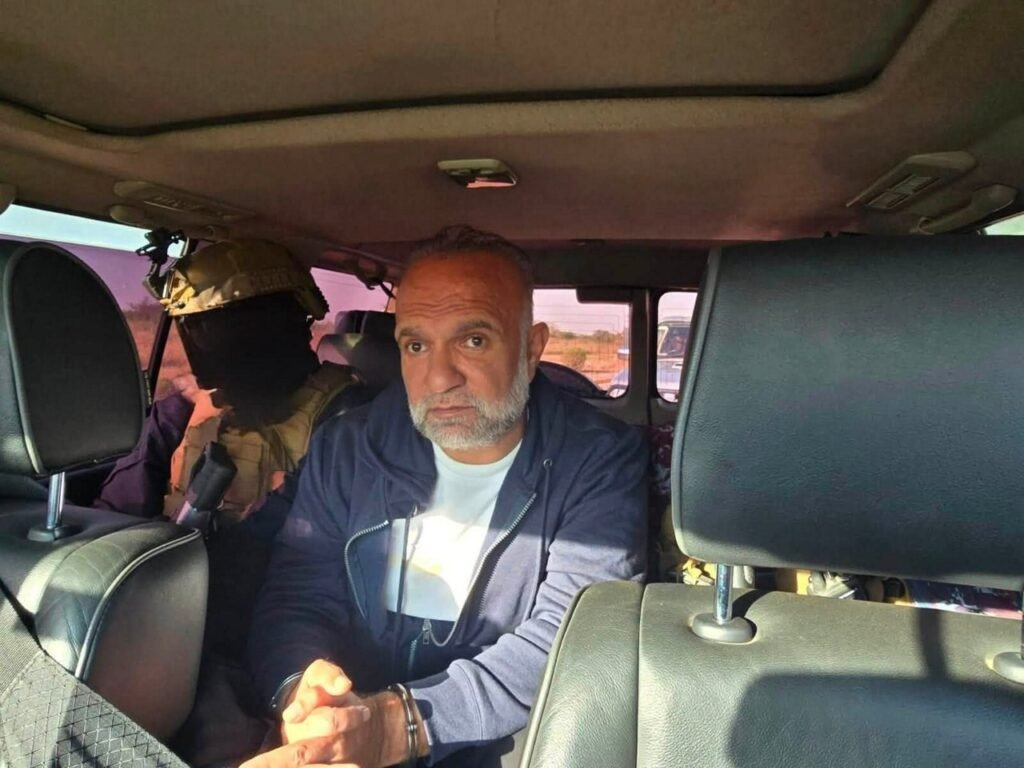
On 15 April 2025, Abdul Zahir Qadeer was arrested in Nairobi, Kenya, by the Directorate of Criminal Investigations (DCI) following a request from the US Drug Enforcement Administration (DEA). He was extradited to the United States on 10 July 2026 and appeared before the US District Court for the Southern District of New York.
The extradition followed proceedings before the Kenyan courts, which the Office of the Director of Public Prosecutions set out publicly at the time:
DPP secures extradition orders for Afghan national wanted in the US
The Director of Public Prosecutions has secured extradition orders against an Afghan national wanted in the United states of America to face charges of narcotics importation.
Senior Principal Magistrate Benmark… pic.twitter.com/62AxfAZ1wL
— Office of The Director Of Public Prosecutions (@ODPP_KE) May 13, 2025
According to the criminal complaint unsealed by the US Attorney’s Office for the Southern District of New York, Qadeer has been charged with:
- Conspiracy to import heroin and methamphetamine into the United States.
- Using and carrying machine guns and destructive devices during, and possessing machine guns and destructive devices in furtherance of, the alleged narcotics-importation conspiracy.
- Conspiracy to use and carry machine guns and destructive devices during, and possess machine guns and destructive devices in furtherance of, the alleged narcotics-importation conspiracy.
The Justice Department states that, if convicted, Qadeer faces a statutory minimum of ten years in prison on the narcotics conspiracy count and a minimum of thirty years on the weapons counts, with a maximum of life imprisonment on both.
These charges remain allegations, and Qadeer is presumed innocent unless and until proven guilty in court.
🚨Former Afghan General and First Deputy House Speaker Extradited to U.S. to Face Charges of Conspiring to Traffic Hundreds of Kilograms of Heroin and Methamphetamine and Provide Arsenal of Military-Grade Weaponry
“While purporting to be a political leader of Afghanistan, Abdul… pic.twitter.com/0P3CpRzaJK
— U.S. Department of Justice (@TheJusticeDept) July 10, 2026
The case was picked up quickly by Afghan outlets:
Zahir Qadir Charged in the U.S. with Drug Trafficking and Weapons-Related Offenseshttps://t.co/nMxIV9BRp2
— Hasht-e Subh English (@8AM_Media) July 11, 2026
Who is Abdul Zahir Qadeer?
Abdul Zahir Qadeer (also known as Haji Zaher Qader) is a former Afghan politician and military commander. He served as a member of Afghanistan’s National Assembly (Wolesi Jirga) representing Nangarhar Province and later became First Deputy Speaker of the House. Prior to entering parliament, he served as commander of the 8th Battalion of the Afghan Border Police. He is the son of Haji Abdul Qadeer, a senior Northern Alliance commander, former Governor of Nangarhar, and later Vice President of Afghanistan, who was assassinated in Kabul on 6 July 2002.
Allegations in the US criminal complaint
According to the criminal complaint, the DEA began investigating Qadeer and several associates in or around November 2024 on suspicion of involvement in international narcotics and weapons trafficking.
As part of the investigation, the DEA utilised a confidential source who posed as a representative of a supposed international drug trafficking organisation. During their initial conversations, the source informed Qadeer that the organisation was seeking a new supplier capable of providing 400 to 600 kilograms of heroin and methamphetamine per shipment for eventual importation into the United States. According to the complaint, Qadeer responded that such quantities would be “easy” for him to provide. The two continued communicating through encrypted electronic messaging applications, portions of which were included in the unsealed complaint.
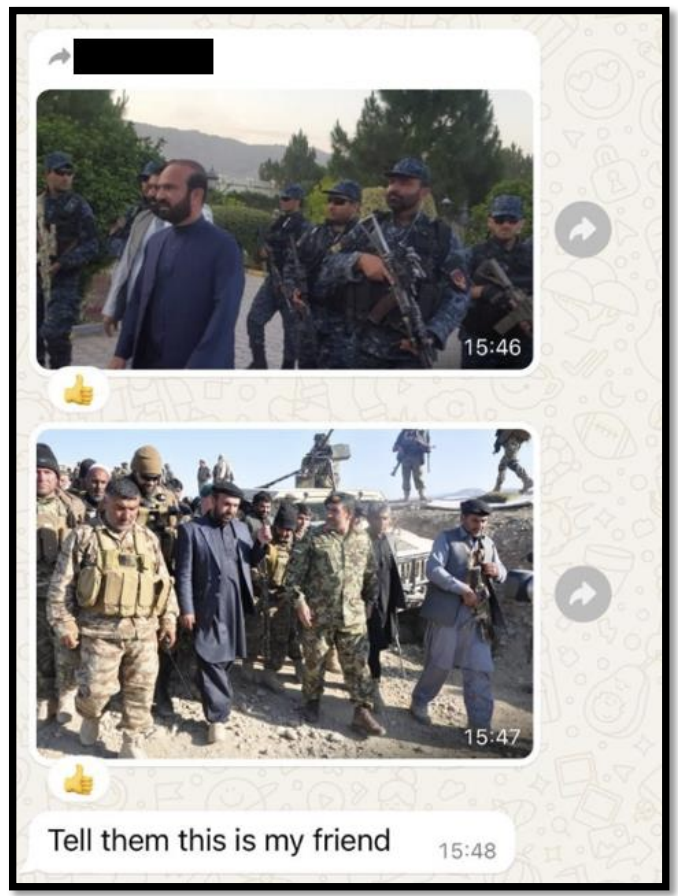
During one exchange, Qadeer reportedly explained that the Taliban’s control over Afghanistan had caused fluctuations in the price of narcotics. However, he stated that with sufficient financial resources and a capable team, cooperation from the Taliban could be secured.
Following several weeks of discussions, Qadeer agreed to arrange a two-kilogram sample shipment of methamphetamine to Johannesburg, South Africa. According to the complaint, payment was made through a hawala transfer to Qadeer’s nephew in Afghanistan.
On 10 December 2024, the two-kilogram shipment was delivered to the source in Johannesburg in exchange for US$14,000. South African law enforcement officers examined the shipment, which was packaged in plastic containers bearing a distinctive green marking, and field-tested the substance, confirming it was methamphetamine.
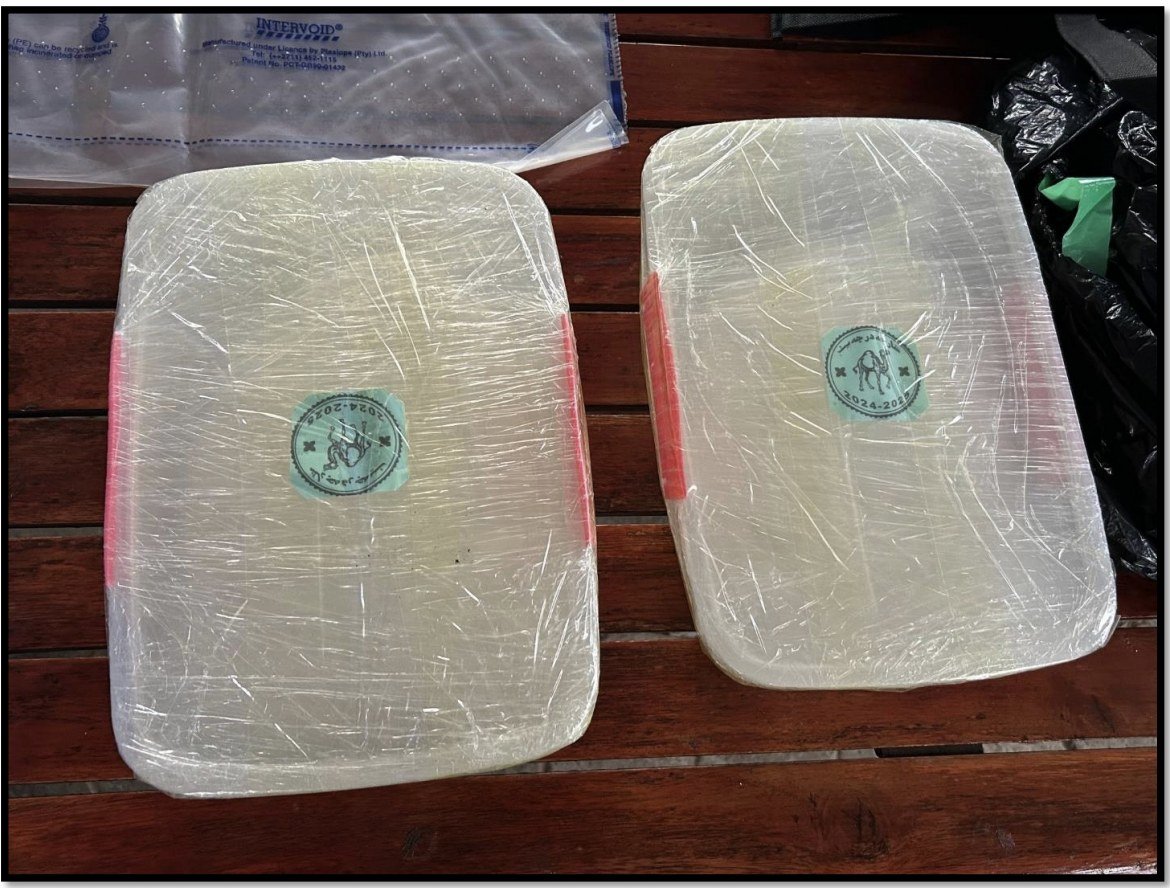
Following the successful delivery, the source informed Qadeer that their organisation was satisfied with the quality of the shipment and was prepared to purchase 500 to 600 kilograms each of methamphetamine and heroin for eventual distribution in New York City.
Alleged weapons negotiations
After discussing the proposed narcotics transaction, negotiations expanded to include military-grade weapons.
According to the complaint, the source told Qadeer that the organisation required weapons to protect future narcotics shipments from “US guards,” “Navy SEALs,” and pirates during transportation. Qadeer allegedly responded that his suppliers generally dealt in large quantities and could provide between 200 and 300 rifles per order.
On or about 11 January 2025, the source sent Qadeer a detailed weapons request on behalf of the purported organisation. The complaint states that Qadeer forwarded the list to his suppliers and later mentioned that the requested weapons could be delivered to Kenya or Tanzania within approximately one week to ten days.
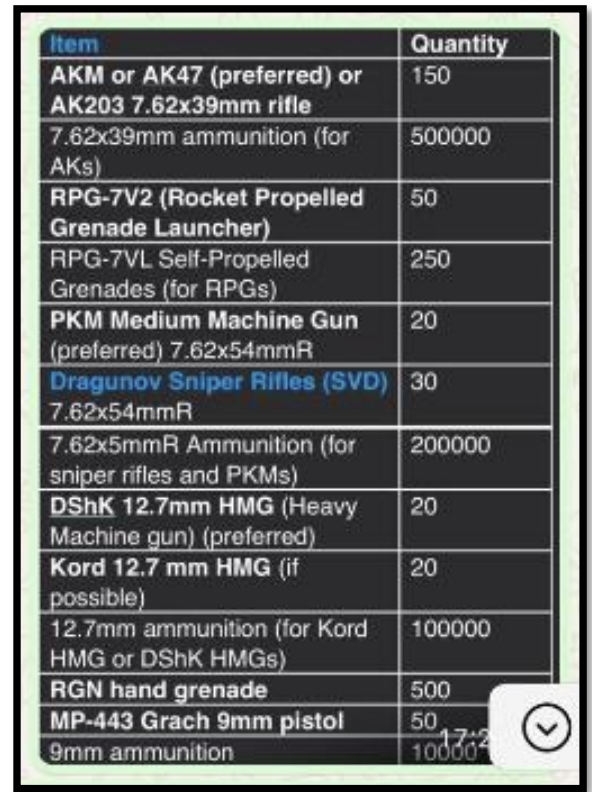
On 16 January 2025, Qadeer allegedly provided the source with photographs and price quotations for a range of military equipment, including:
- Sniper rifle – US$11,579
- Kord heavy machine gun – US$9,670
- PK machine gun – US$9,120
- DShK heavy machine gun – US$5,769
- AKM assault rifle – US$3,112
- RPG launcher – US$1,770
- Box of ten grenades – US$1,770
- Pistol – US$1,089
The complaint also alleges that Qadeer stated the weapons and ammunition could be delivered within three days once a delivery location had been provided.
On 7 February 2025, the source informed Qadeer that an in-person meeting would be arranged with representatives of the purported organisation to discuss both the narcotics and weapons transactions. Qadeer agreed to the meeting.
According to US authorities, these interactions formed part of an undercover DEA operation. A warrant for Qadeer’s arrest was subsequently issued, ultimately leading to his arrest in Nairobi in April 2025 and extradition to the United States in July 2026.
Did Qadeer have access to weapons?
The US criminal complaint does not identify the individuals whom Qadeer referred to as his “suppliers,” nor does it indicate whether investigators established their identities. Therefore, it is not possible to identify these individuals based on publicly available information. However, Qadeer has had access to deep political, military and regional networks, many of which may have survived the Taliban takeover of the country in August 2021, despite enmity between his family and the group.
What the equipment itself indicates is the kind of network being claimed. The list is not a civilian firearms order. Several of the items named are crew-served or battlefield weapons — the DShK and Kord heavy machine guns, the PK-series machine guns and the RPG systems — operated by a team rather than an individual, and with no commercial market. Of everything offered, only the MP-443 Grach pistol has an ordinary civilian equivalent.
Abdul Zahir Qadeer belonged to one of eastern Afghanistan’s most influential political families. His father, Haji Abdul Qadeer, was a prominent mujahideen commander, Governor of Nangarhar Province, then a senior leader of the anti-Taliban Northern Alliance between 1999 and 2001, Minister of Public Works and Vice President until he was assassinated in July 2002. Throughout the 1990s and early 2000s, the Qadeer family developed extensive political, tribal and military influence across Nangarhar Province, particularly among former mujahideen commanders and border security structures.
Abdul Zahir Qadeer’s influence extended beyond his formal government positions. According to a 2008 US Department of State human rights report, Afghan authorities attempted to remove him from his position as Border Police commander in 2006 following allegations of corruption. The report states that, despite the Ministry of Interior halting salary payments to personnel under his command, Qadeer reportedly continued financing both existing officers and an additional force of more than 1,000 personnel using private funds, effectively maintaining a privately funded militia. Although these allegations were never adjudicated in court, they suggest that Qadeer possessed both the financial resources and organisational capacity to sustain an independent armed network.
A 2006 United Nations Disarmament, Demobilisation and Reintegration report documented that Zahir Qadeer, then commander of the Frontier Brigade in Afghanistan’s Eastern Region, voluntarily surrendered 315 weapons, including AK-47 rifles, PK machine guns, rocket-propelled grenade launchers, mortars and anti-aircraft weapons, to the Afghan New Beginnings Programme (ANBP) — an initiative that aimed to disarm the Afghan militias and reintegrate them into the Afghan National Army by providing them with an alternative line of work. This inventory demonstrates that forces under Qadeer’s command had access to substantial quantities of military-grade weaponry.
Questions surrounding the origin of Qadeer’s wealth have also persisted throughout his political career. In 2016, TOLOnews reported that members of Afghanistan’s Wolesi Jirga criticised Qadeer after he publicly claimed to possess approximately US$400 million in assets. Anti-corruption analysts interviewed by TOLOnews argued that public officials should be able to account for the lawful origin of their wealth and called for greater financial transparency. Although no criminal findings resulted from these concerns, the episode contributed to longstanding public scrutiny regarding Qadeer’s financial resources.
Historical allegations and regional networks
Qadeer’s political and military influence was concentrated in Nangarhar Province, a strategically important region bordering Pakistan through the Torkham border crossing, one of Afghanistan’s busiest commercial gateways. For decades, Nangarhar has served as a major transit corridor connecting Afghanistan with Pakistan, facilitating both legitimate cross-border trade and illicit trafficking networks.
Allegations linking Qadeer to narcotics trafficking predate the 2026 US criminal complaint by many years. His political career was repeatedly accompanied by accusations of drug smuggling, maintaining private militias, and involvement in land-grabbing, although these allegations did not result in criminal convictions during the Islamic Republic period.
In 2007, Afghan authorities arrested five Border Police officers transporting 123.5 kilograms of heroin in an official Border Police vehicle. The officers served under Qadeer while he commanded the 8th Border Battalion. According to US State Department reporting, those charged included Qadeer’s personal bodyguard and his nephew, who also acted as his secretary. The incident reportedly contributed to his removal from the Border Police, although Qadeer himself was not prosecuted.
In 2011, Afghanistan’s Attorney General’s Office requested that Qadeer appear before prosecutors in connection with another narcotics investigation involving approximately 1,235 kilograms of heroin. Prosecutors alleged that several detained Border Police officers implicated Qadeer in the operation and claimed the narcotics originated from his residence. Qadeer rejected the allegations, describing them as politically motivated.
Afghanistan has historically contained large quantities of Soviet-origin and internationally supplied military equipment due to decades of conflict. Following the establishment of the Afghan National Defence and Security Forces (ANDSF) after 2001, the United States and its allies provided billions of dollars’ worth of military equipment, including small arms, vehicles, aircraft and other military supplies.
According to the US Government Accountability Office (GAO), the United States provided extensive security assistance to Afghanistan between 2002 and 2017, including the delivery of hundreds of thousands of weapons to Afghan security forces. The GAO noted longstanding challenges regarding accountability, including difficulties tracking weapons after their transfer to Afghan forces. The Stockholm International Peace Research Institute (SIPRI) similarly documented large-scale international arms transfers to Afghanistan between 2001 and 2020. These transfers included firearms, armoured vehicles, aircraft and other military equipment supplied primarily by the United States and its partners.
The collapse of the Afghan government in August 2021 created additional concerns regarding weapons proliferation. Research by Conflict Armament Research documented weapons captured by the Taliban during their takeover, including equipment previously supplied to Afghan security forces. The organisation noted that Taliban seizures included small arms, machine guns, ammunition and other military equipment.
However, publicly available evidence does not establish that any weapons offered by Qadeer originated from former Afghan government stockpiles. The significance of these weapons is instead that they are consistent with the types of Soviet-origin equipment that have circulated within Afghanistan and neighbouring regions due to decades of conflict, military assistance programmes, battlefield capture and illicit trafficking.
The ability to source and transport military equipment across borders would require access to established logistics networks, intermediaries and individuals familiar with regional security environments. The complaint states that Qadeer told the DEA source that weapons could be delivered to the agreed location within days, suggesting that he claimed access not only to suppliers but also to transportation channels capable of facilitating international movement.
Nevertheless, the criminal complaint does not identify the individuals referred to as Qadeer’s “suppliers,” and there is currently no publicly available evidence linking any specific arms trafficker, armed group or state actor to the alleged weapons negotiations.
The case of Abdul Zahir Qadeer demonstrates the complexity of Afghanistan’s post-2001 political and security landscape, where former officials, armed actors and regional networks often maintained influence beyond formal government structures. It also illustrates the persistence of this influence through exile and the Taliban takeover. The allegations outlined in the US criminal complaint remain unproven in court; however, the case provides insight into how longstanding political connections, border security experience and regional relationships may facilitate transnational criminal activity.
More investigations
View all
The apps that watch you: how stalkerware enables tech-facilitated abuse
Apps sold as parental control let abusers read a partner’s messages, track their location and stay hidden. Intel…
How propaganda travels across borders and online platforms
A comparison of how pro-Taliban, pro-Russia, pro-China and pro-Iran networks produce and amplify propaganda, and how organic and…
Insurgent attacks in southern Thailand: geolocation and analysis
Nine attackers, ninety seconds and two CCTV cameras. Intel Focus geolocates the checkpoint ambush that killed five Thai…